
LinkedIn Download (2026) – 10 Powerful Professional Networking and Career-Building Features for Android Users
Just Now
10 MB
V5.3
Andriod +
50M +
Description
LinkedIn is one of the world’s most popular professional networking platforms, helping people connect with colleagues, employers, recruiters, business owners, and industry experts. Unlike traditional social media platforms that mainly focus on entertainment and personal updates, LinkedIn is designed around professional relationships, career development, business networking, and knowledge sharing. Users can create professional profiles, showcase their qualifications, share achievements, and explore opportunities across different industries.
In today’s competitive job market, having a strong online professional presence can make a meaningful difference. LinkedIn provides a convenient space where job seekers can discover vacancies, companies can find talented professionals, and individuals can develop valuable business connections. Whether someone is starting a career, looking for a new position, promoting a business, or building an international network, LinkedIn offers tools to support their professional goals.
What Is LinkedIn and How Does It Work?
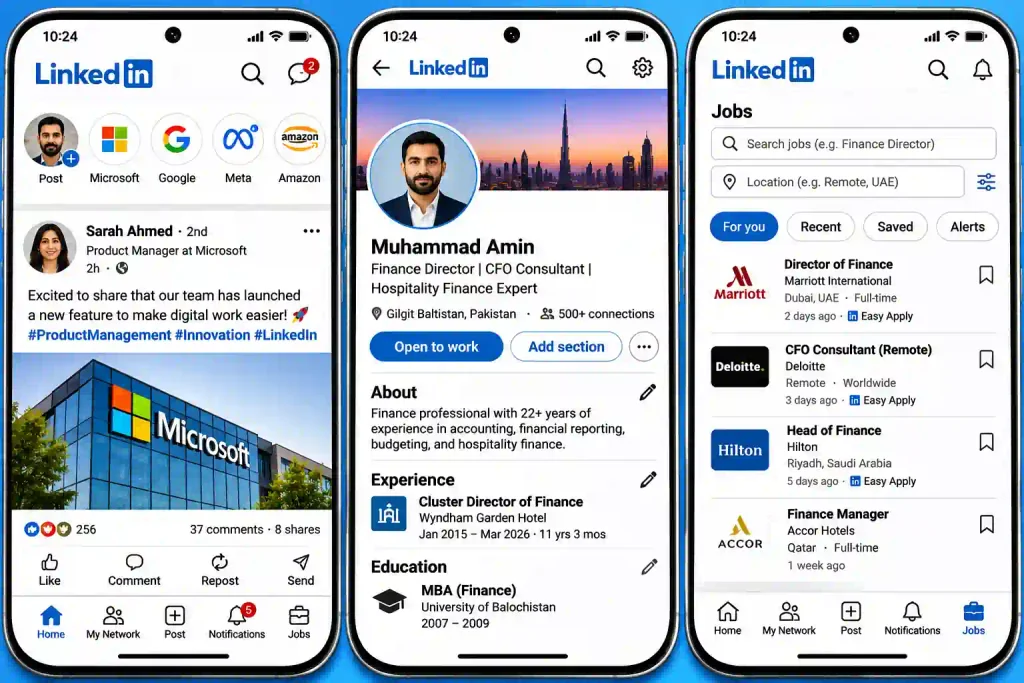
LinkedIn is a professional networking platform where users create profiles that represent their education, work experience, skills, qualifications, and career achievements. Members can connect with other professionals, follow companies, join industry groups, publish posts, and communicate through direct messages. The platform also provides job-search features that help candidates discover employment opportunities and interact with recruiters.
LinkedIn works through a network of professional profiles and connections. After creating an account, users can complete their profiles, connect with people, follow organizations, and explore relevant content. Its recommendation systems help display suggested connections, job opportunities, and posts based on available profile information and user activity. Some advanced tools, courses, and networking features require a paid subscription. You can visit the website Apkmoz
Getting Started with LinkedIn – Account Setup and Registration
- Visit the official LinkedIn website or download the mobile application.
- Select the option to join or create an account.
- Enter your email address or mobile number.
- Create a strong and secure password.
- Provide your name and basic professional information.
- Complete the verification process if requested.
- Select your location and current professional status.
- Add your education and employment information.
- Upload a professional profile photograph.
- Review your account settings and preferences.
Exploring the LinkedIn Home Screen and Main Navigation
- Home: View professional posts, updates, and industry discussions.
- My Network: Manage connections and discover new professionals.
- Jobs: Search for employment opportunities.
- Messaging: Communicate with connections and recruiters.
- Notifications: Receive updates about your account and network.
- Profile: Access and manage your professional information.
- Search Bar: Find people, companies, jobs, and content.
- Premium: Explore subscription-based professional features.
LinkedIn Profile Optimization – Building a Professional Online Identity
- Upload a clear and professional profile picture.
- Add an appropriate background or cover image.
- Write a strong professional headline.
- Complete the About section.
- Include relevant work experience.
- Add educational qualifications and certifications.
- Highlight important professional skills.
- Add portfolio links and project information.
- Keep your contact information updated.
- Review your profile regularly.
LinkedIn Headline and About Section – Presenting Your Skills and Experience
- Write a headline that explains your professional role.
- Include relevant industry keywords.
- Highlight your main qualifications and expertise.
- Explain your professional background in the About section.
- Mention important achievements and career goals.
- Describe the services you offer.
- Use clear and professional language.
- Avoid unnecessary information and exaggerated claims.
LinkedIn Experience and Education – Showcasing Your Career Background
- Add your current and previous job positions.
- Include company names and employment dates.
- Describe your main responsibilities.
- Highlight measurable professional achievements.
- Add relevant educational qualifications.
- Include professional certifications.
- Mention important training programs.
- Keep your career information accurate and consistent.
LinkedIn Skills and Endorsements – Highlighting Professional Strengths
- Add skills relevant to your profession.
- Include technical and management abilities.
- Highlight communication and leadership skills.
- Arrange your most important skills prominently.
- Request endorsements from professional connections.
- Endorse skills when you genuinely recognize someone’s expertise.
- Remove outdated or irrelevant skills.
- Update your skills as your career develops.
LinkedIn Recommendations – Building Trust and Professional Credibility
- Request recommendations from former managers.
- Ask colleagues to describe your professional contributions.
- Request feedback from clients and business partners.
- Write recommendations for people you have worked with.
- Highlight specific achievements and strengths.
- Keep recommendations genuine and professional.
- Review recommendations before displaying them.
- Use recommendations to strengthen your profile.
LinkedIn Connections – Expanding Your Professional Network
- Connect with colleagues and former classmates.
- Find professionals working in your industry.
- Send personalized connection invitations.
- Follow industry experts and business leaders.
- Connect with recruiters and hiring managers.
- Build relationships with relevant professionals.
- Participate in meaningful discussions.
- Maintain your professional network.
LinkedIn Feed – Discovering Professional News and Industry Updates
- View posts from your connections.
- Discover updates from followed companies.
- Read industry news and professional discussions.
- Explore trending topics.
- Find career advice and educational content.
- Follow relevant hashtags and creators.
- Engage with useful professional posts.
- Customize your feed through available preferences.
LinkedIn Posts – Sharing Ideas, Knowledge, and Career Experiences
- Share professional achievements.
- Publish career updates.
- Post industry-related information.
- Share photographs and videos.
- Write educational and informative content.
- Ask questions to encourage discussions.
- Use relevant hashtags.
- Respond to comments and feedback.
- Maintain a professional posting style.
LinkedIn Articles and Newsletters – Publishing Professional Content
- Write detailed professional articles.
- Share industry knowledge and experience.
- Publish educational information.
- Create newsletters around specific topics.
- Build an audience interested in your content.
- Share useful research and insights.
- Encourage readers to participate in discussions.
- Maintain consistency in publishing.
LinkedIn Groups – Connecting with People in Your Industry
- Search for groups related to your profession.
- Join relevant industry communities.
- Participate in professional discussions.
- Share helpful information.
- Ask questions and exchange knowledge.
- Connect with group members.
- Follow group rules and guidelines.
- Avoid unnecessary promotional messages.
LinkedIn Messaging – Communicating with Professionals and Recruiters
- Send messages to your connections.
- Communicate with recruiters.
- Discuss professional opportunities.
- Share documents and relevant links.
- Follow up on job applications.
- Respond to professional inquiries.
- Use InMail where available.
- Keep conversations respectful and professional.
LinkedIn Job Search – Finding Career Opportunities Worldwide
- Open the Jobs section.
- Search using job titles and keywords.
- Select your preferred location.
- Apply filters for experience level.
- Explore remote and hybrid opportunities.
- Review job descriptions carefully.
- Check company information before applying.
- Save suitable vacancies for later.
- Submit applications through available options.
LinkedIn Easy Apply – Applying for Jobs More Conveniently
- Search for vacancies with the Easy Apply option.
- Open the job description.
- Review the employer’s requirements.
- Select Easy Apply when available.
- Upload or select your updated CV.
- Complete the required application fields.
- Check your information before submitting.
- Monitor your application status where available.
LinkedIn Job Alerts – Staying Updated on New Vacancies
- Search for your preferred job title.
- Select your target location.
- Apply relevant search filters.
- Activate job alerts when available.
- Choose your preferred notification frequency.
- Review new vacancy notifications.
- Save relevant opportunities.
- Adjust alerts when your career goals change.
LinkedIn Open to Work – Showing Recruiters You Are Available
- Open your LinkedIn profile.
- Select the Open to Work option.
- Add preferred job titles.
- Choose suitable work locations.
- Select employment types.
- Specify your availability.
- Choose who can see your job-seeking status.
- Update your preferences when necessary.
LinkedIn Company Pages – Exploring Businesses and Organizations
- Search for companies and organizations.
- View company descriptions and activities.
- Explore available job vacancies.
- Follow company updates.
- Learn about workplace culture.
- Discover company employees and leadership.
- Review business announcements.
- Research potential employers before applying.
LinkedIn Learning – Developing Skills Through Online Courses
- Explore professional learning courses.
- Find courses related to your career.
- Study business and management topics.
- Learn technical and digital skills.
- Follow structured learning paths.
- Watch educational video lessons.
- Complete course assessments where available.
- Add eligible completed courses to your profile.
LinkedIn Premium – Understanding Advanced Networking and Career Tools
- Explore available Premium subscription plans.
- Access additional profile insights.
- Review eligible applicant insights.
- Use InMail credits where included.
- Explore advanced search options.
- Access additional learning benefits where included.
- Review subscription pricing and features.
- Compare free and paid account benefits before subscribing.
LinkedIn Creator Tools – Building Your Professional Audience
- Create informative professional content.
- Share industry knowledge.
- Publish articles and newsletters.
- Build an audience around your expertise.
- Use available creator analytics.
- Participate in professional conversations.
- Explore eligible content creation features.
- Maintain a consistent publishing strategy.
LinkedIn Sales Navigator – Finding Leads and Business Opportunities
- Discover potential business customers.
- Search for companies and decision-makers.
- Apply advanced lead filters.
- Save important leads and accounts.
- Monitor business-related updates.
- Organize potential sales opportunities.
- Build targeted prospect lists.
- Use available tools to support sales activities.
LinkedIn Privacy and Security – Protecting Your Professional Account
- Create a strong account password.
- Enable two-step verification.
- Review account privacy settings.
- Manage profile visibility.
- Check connected devices and sessions.
- Control who can send connection invitations.
- Avoid suspicious messages and links.
- Review third-party application permissions.
- Report fake profiles and inappropriate activity.
Advantages and Disadvantages of LinkedIn
| Advantages | Disadvantages |
|---|---|
| Helps build professional connections | Requires regular profile maintenance |
| Provides access to worldwide job opportunities | Job competition can be high |
| Supports professional branding | Some features require Premium |
| Allows direct communication with recruiters | Unwanted messages may occur |
| Helps users discover companies | Some profiles contain misleading information |
| Offers professional learning opportunities | Certain courses require payment |
| Supports business networking | Building a strong network takes time |
| Provides industry news and updates | Feed content may sometimes be distracting |
| Helps showcase skills and achievements | A profile alone does not guarantee employment |
Frequently Asked Questions (FAQs)
Q1. What is LinkedIn mainly used for?
LinkedIn is mainly used for professional networking, job searching, career development, business promotion, and sharing industry-related information.
Q2. Is LinkedIn free to use?
Yes. LinkedIn offers a free account with basic networking, profile creation, and job-search features. Premium subscriptions provide additional tools.
Q3. Can I find jobs on LinkedIn?
Yes. You can search for local and international job opportunities, explore remote positions, and apply through available application methods.
Q4. Can I find remote jobs on LinkedIn?
Yes. You can search using keywords such as Remote, Work From Home, and Virtual, then apply location and employment filters.
Q5. How can I make my LinkedIn profile professional?
Use a professional photograph, write a clear headline, complete your About section, add work experience, list relevant skills, and highlight your achievements.
Q6. Can recruiters contact me on LinkedIn?
Yes. Recruiters can contact you through LinkedIn messaging and other available communication features, depending on your profile and account settings.
Q7. What is Open to Work?
Open to Work is a profile feature that allows eligible users to indicate that they are interested in new employment opportunities.
Q8. What is Easy Apply?
Easy Apply is an application option that allows candidates to submit job applications directly through for participating vacancies.
Q9. What is the difference between and Facebook?
LinkedIn focuses on professional networking, careers, and business relationships, while Facebook mainly focuses on personal social networking, communities, and general content sharing.
Q10. What is Premium?
LinkedIn Premium is a paid subscription that offers additional professional features, which may include InMail credits, profile insights, and advanced tools.
Q11. Can I upload my CV ?
Yes. You can add your CV when applying for jobs and use available profile sections to showcase your professional qualifications and experience.
Q12. Can I create a company page on ?
Yes. Eligible users can create company pages to present their organizations, share updates, promote services, and connect with professionals.
Q13. What is Learning?
LinkedIn Learning is an online educational platform offering video courses in areas such as business, technology, management, and creative skills.
Q14. Is safe for professional networking?
LinkedIn provides privacy and security features, including account protection options. Users should still avoid suspicious links, fake profiles, and requests for sensitive information.
Q15. Can help me build an international career?
Yes. LinkedIn allows you to connect with international employers, recruiters, and professionals and discover employment opportunities in different countries.
Final Verdict – Is LinkedIn Worth Using?
LinkedIn is a valuable platform for people who want to develop their careers, expand professional networks, discover employment opportunities, and build a strong online identity. Its profile-building tools, job-search features, messaging options, learning resources, and business networking capabilities make it useful for both individuals and organizations.
Overall, LinkedIn is worth using for job seekers, experienced professionals, students, freelancers, recruiters, and business owners. Although having a profile does not guarantee a job or business opportunity, regularly updating your information, connecting with relevant professionals, and engaging with useful content can help you make better use of the platform.